Peony Kitchen Glove: A Designer's Review for Branding
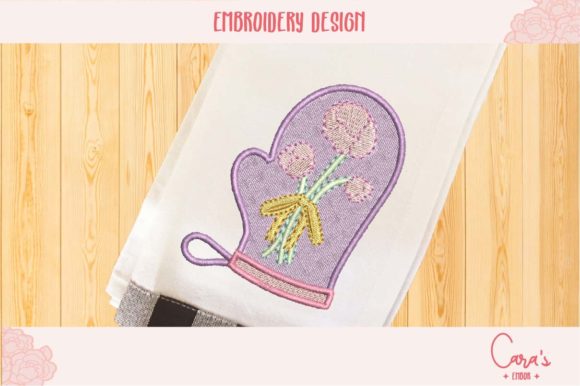
As an embroidery designer who spends most of my days digitizing logos and prepping files for commercial production, I approach every new machine embroidery design with a critical eye. It is not just about whether a pattern looks pretty on a screen; it is about how it translates to fabric, how it withstands the wash cycle, and ultimately, how it serves a small business owner trying to build a recognizable brand. Today, I am reviewing the Peony Kitchen Glove design. While the title suggests a specific application for oven mitts, my assessment focuses on its viability as a versatile asset for branded merchandise, patches, and professional apparel.
First Impressions: Elegance Meets Utility
The first thing that strikes me about the Peony Kitchen Glove is its inherent duality. The description promises a "cute peony touch," which immediately signals a friendly, approachable aesthetic. However, the subject matter—a peony—is a classic symbol of prosperity and honor in many cultures, often associated with high-end floristry and boutique branding. This design feels less like a childish cartoon and more like a handmade product marker that conveys quality and care.
Visually, one can anticipate a design that balances decorative flair with structural integrity. For a small business, such as a local bakery, a floral studio, or a boutique café, this visual personality is gold. It suggests that the brand values beauty and detail without sacrificing function. Unlike aggressive or overly modern geometric logos, a peony motif softens the brand image, making it ideal for businesses that rely on customer trust and a warm, welcoming atmosphere.
Real-World Business Applications Beyond the Kitchen
While the product category is listed as Kitchen, limiting this digital embroidery file to just oven gloves would be a missed opportunity for merch creators. In a real-world scenario, I see this design thriving as an embroidered patch sewn onto canvas tote bags. Imagine a florist handing out a branded tote at a weekend market; the peony design acts as a subtle yet elegant logo that customers actually want to wear.
Furthermore, consider its use on staff uniforms. For a boutique hotel or a high-end tea room, placing this design on the chest pocket of a work shirt or as a sleeve detail on an apron adds a layer of sophistication. It transforms a standard uniform into a piece of custom apparel that employees feel proud to wear. The design could also serve as a cap embroidery option for outdoor markets or food trucks, provided the scaling is handled correctly.
For Etsy sellers and crafters, this design is a perfect candidate for "finished product" add-ons. Selling a set of linen napkins or a tea towel series? Adding this peony motif increases the perceived value of the item, allowing you to charge a premium for the handmade presentation. It turns a commodity into a branded experience.
Technical Considerations for Production
Before rushing to stitch this out for a client order, there are several technical factors we must evaluate. The description notes that the design comes in multiple formats, which is excellent for compatibility across different machine brands. However, as a professional, I always advise checking the specific stitch density before running a full production batch.
Peonies are naturally detailed flowers with many overlapping petals. If the digitizer has packed too many stitches into a small area, the design might become stiff or cause puckering, especially on lighter fabrics like cotton aprons or linen towels. Conversely, if the density is too low, the coverage might look sparse on dark uniforms. My recommendation is to test the embroidery file on a scrap piece of the actual fabric you intend to use. Pay close attention to the thread colors; ensure there is enough contrast between the petals and the background fabric so the design remains legible from a distance.
Another critical factor is the hoop size. Since the original intent is for kitchen gloves, the design might be optimized for a smaller hoop. If you plan to scale this up for a large tote bag or a back-of-shirt logo, you must verify that the resolution holds up. Enlarging a low-resolution embroidery file can result in jagged edges and lost detail. Always request the largest available size from the vendor if you plan to modify the scale.
Strategic Placement and Brand Identity
Where you place the Peony Kitchen Glove design dictates its impact on your brand identity. On a curved surface like a cap front, the center of the peony needs to be positioned carefully to avoid distortion. For apron embroidery, placing the design slightly off-center or near the hem can create a more modern, asymmetrical look that appeals to younger demographics.
Consistency is key. If you use this design on your packaging accents, such as a stitched label on a gift box ribbon, ensure the thread colors match your primary brand palette exactly. This visual consistency builds recognition. When a customer sees that same peony on your website, your social media, and the physical product they hold, it reinforces professionalism and attention to detail.
However, caution is needed with tiny lettering if the design includes any text elements (though the description focuses on the visual motif). Small details can get lost in the stitching process. If this design is intended to be a standalone icon, it works beautifully. If it relies on fine lines to define the petals, it may not perform well on textured fabrics like terry cloth or heavy denim without a robust stabilizer.
Designer Notes for Commercial Success
To ensure the Peony Kitchen Glove delivers the best results for your small business merch, follow these practical steps:
- Test in Black and White First: Before committing to colorful threads, stitch a sample using a single color. This helps you evaluate the shape and clarity of the design without the distraction of color blending.
- Check Scalability: Verify if the design retains its integrity when resized for a small patch versus a large tote. Not all files scale linearly.
- Fabric Testing: Always test on the exact material you will sell. A design that looks great on twill might sink into a knit polo.
- Stabilizer Selection: Use the appropriate stabilizer for the fabric weight. Cut-away stabilizers are often better for items that will undergo frequent washing, like kitchen gloves and aprons.
- Create a Printable Mockup: Before stitching, create a digital mockup to show clients or stakeholders. This saves time and money if adjustments are needed.
- Verify Licensing: Since this is for commercial use, confirm the license terms. Ensure you have the right to sell finished products featuring this design asset.
In conclusion, the Peony Kitchen Glove is more than just a kitchen accessory pattern; it is a potential cornerstone for a cohesive brand aesthetic. With its blend of elegance and utility, it offers small business owners a way to elevate their commercial embroidery projects. By paying attention to technical details like stitch density, fabric texture, and placement, you can transform this simple embroidery file into a powerful tool for customer engagement and brand loyalty. Whether it ends up on a baker's apron or a florist's tote, this design has the potential to make a lasting impression.