Hamsa: The Ultimate Craft Fair Best-Seller Design
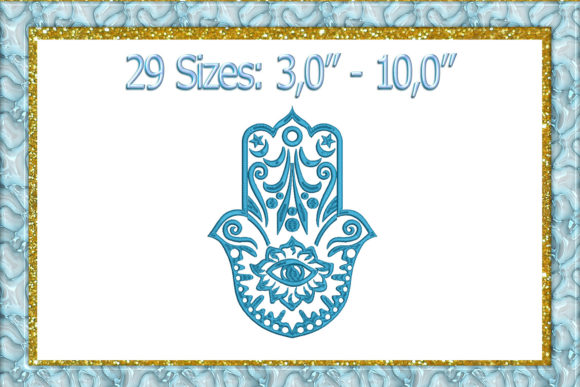
As I set up my booth for the upcoming weekend market, I am constantly evaluating which machine embroidery design will stop customers in their tracks. Today, I am reviewing the Hamsa, a file that promises to be an intricate and extremely beautiful accent for various creations. For us Etsy sellers and boutique makers, finding a design that balances visual impact with production practicality is the holy grail. The Hamsa immediately strikes me as a piece that bridges the gap between spiritual elegance and modern home decor, fitting perfectly into the House category while offering versatility for apparel.
First Impressions and Visual Appeal
When I first loaded the digital embroidery file onto my screen, the Hamsa felt instantly premium. It does not scream "cute" in a childish way; rather, it exudes a decorative and slightly rustic charm that appeals to a wide demographic. In a sea of generic florals and monograms at a craft fair, this design stands out because of its symbolic weight and intricate detailing. It feels bold enough to be a focal point on a large item but possesses the grace to serve as a lovely accent on smaller goods. For a handmade product line, this kind of visual depth suggests high value, allowing us to price our finished items with confidence.
Where Hamsa Shines on Market Products
The true test of any embroidery file is how it translates from the screen to physical goods. Based on the description, the Hamsa is destined to look amazing on apparel and home decor. Here is how I plan to deploy it across my craft fair product lineup:
- Tote Bags and Market Bags: This is likely the strongest contender. A large Hamsa centered on a canvas tote creates an instant statement piece. The intricate details will catch the eye of shoppers walking down the aisle, making it a perfect tote bag design for eco-conscious buyers.
- Aprons and Tea Towels: For the kitchen section of my booth, apron embroidery featuring this motif adds a touch of protection and style. Similarly, tea towel embroidery with the Hamsa elevates a simple linen towel into a giftable heirloom. The design works well here as a central medallion or a corner accent.
- Pillow Covers and Bedsheets: Since the product category is House, these items are natural fits. The symmetry of the Hamsa looks stunning on square pillow covers, adding a bohemian or traditional flair depending on the thread choices.
- Embroidered Patches and Caps: If the file allows for scaling without losing clarity, small patches can be ironed onto denim jackets or hats. However, curved surfaces like caps require careful consideration of the design's density.
Production Realities and Selling Points
From a business owner's perspective, the Hamsa offers excellent potential for batch production. Because the design is described as intricate, it implies a higher stitch count, which justifies a higher price point for the finished product. Customers at craft fairs appreciate seeing the texture and density of real stitching; it differentiates our work from cheap, printed imports. The design photographs beautifully for online listings, creating a striking printable mockup that drives clicks on Etsy or social media. Its complexity ensures that even simple fabric backgrounds look expensive once the commercial embroidery is applied.
However, we must be realistic about production challenges. An "intricate" design often means high stitch density. While this looks luxurious, it can cause puckering if not managed correctly. When preparing for a high-volume event like a weekend fair, repeatability is key. I need to ensure that the Hamsa runs reliably on multiple hoops without constant thread breaks or trimming issues. If the design includes tiny details or small lettering, these might get lost on textured fabrics like terry cloth towels or thick denim.
Critical Considerations for Execution
To ensure every small shop product featuring the Hamsa meets professional standards, I am noting several careful-use points before mass production begins:
- Fabric Texture and Color: On dark fabrics, the contrast of the thread colors becomes critical. Light threads on dark cotton pop, but dense areas might appear bulky. On textured towels, fine details may sink into the loops, reducing clarity.
- Curved Surfaces: Applying this to caps requires a specific cap frame and potentially a simplified version of the design if the original is too wide or dense for the curved seam area.
- Sizing Limitations: Shrinking an intricate design too much can result in a muddy mess where individual stitches merge. It is vital to respect the minimum size recommended by the designer to maintain the "extremely beautiful" quality described.
- Stabilizer Selection: Given the likely density, using the correct stabilizer is non-negotiable. A heavy cut-away might be necessary for apparel to prevent distortion after washing, whereas tear-away could suffice for stable home decor fabrics.
Final Designer Notes and Verification
Before I commit to stitching fifty tote bags or a dozen aprons, I will treat the Hamsa with the scrutiny it deserves. My workflow involves testing the design on scrap fabric identical to my final materials. I need to check the spacing between elements to ensure no bridging issues occur and confirm that the hoop size required fits my machine's capabilities for the intended products. Since the product description mentions it is suitable for bedsheets and pillows, I assume it scales well, but I must verify the actual dimensions provided in the download.
Furthermore, as a responsible creative entrepreneur, I will double-check the licensing terms. The description hints at commercial use for finished goods, but I must confirm there are no restrictions on the number of items I can sell or if the design assets can be modified. Creating at least one real mockup—a stitched sample pinned to a display board—will help me gauge customer reaction before the fair opens. Does the Hamsa draw people in? Does it explain itself visually, or do I need a sign?
In conclusion, the Hamsa appears to be a versatile and high-value addition to any embroidery business. Its ability to enhance everything from a simple tea towel to a structured tote bag makes it a powerhouse for craft fair success. By paying attention to fabric texture, stabilizer choice, and sizing constraints, we can turn this intricate file into a best-selling line of handmade goods that resonates with buyers looking for quality and meaning in their purchases.